

Book Reviews: Project Management

Project Management for Healthcare
David Shirley. 2024. 3rd ed. CRC Press. [ISBN 978-1-003-42775-9. 290 pages. US$59.95 (digital).]
Index Terms—agile methodology, healthcare project management, quality control, stakeholder management, sustainability
Reviewed by Melani Angela Indrayani Raymanus, Student, Universitas Gadjah Mada, supported by Lembaga Pengelola Dana Pendidikan (LPDP), Indonesia.
Project Management for Healthcare: 3rd Edition emphasizes the importance of defining quality in project management and understanding stakeholders’ perspectives on quality. The book focuses on identifying customers, determining their needs, and translating these needs into responsive, optimized products. It discusses the crucial elements of developing appropriate production processes and using Quality Control (QC) methodologies like control charts and histograms to keep the project management process within established boundaries. Additionally, we highlight the significance of setting specific and SMARTER (Specific, Measurable, Achievable, Relevant, Time-bound, Evaluated, and Reviewed) project objectives to effectively guide projects in line with the expectations of all involved parties.
The primary aim of this research is to explore project management in the post-COVID healthcare sector, with a focus on the changing direction of project management in this field. Emphasis is placed in these projects on the application of agile methodologies, green technology, and sustainability. The study also seeks to identify essential project management skills necessary for successful project execution, such as stakeholder management, team coordination, and resource optimization within the healthcare context. David Shirley discusses the importance of setting realistic, measurable objectives to ensure that projects remain aligned with organizational goals and do not experience uncontrolled scope expansion.
The author adopts various methods to address the evolving needs of project management in the healthcare sector, particularly in the post-COVID era. The Project Management Body of Knowledge (PMBOK®) Seventh Edition guidelines, which emphasize performance domains and value delivery systems to achieve optimal outcomes, guide the adjustment of project management practices to meet the specific needs of healthcare projects. Agile methodology is employed to enhance flexibility and responsiveness in projects, enabling adaptation to changes and uncertainties that are characteristic of the dynamic healthcare environment. Data protection is also a priority, with robust data security strategies discussed to safeguard sensitive information and maintain patient confidentiality. Additionally, we adopt the integration of green technology and sustainability to minimize the ecological footprint and improve long-term efficiency. Project success hinges on effective stakeholder management, which involves identifying, understanding, and engaging stakeholders throughout the project lifecycle.
The book integrates current trends like the PMBOK® Seventh Edition and Agile methodology, focusing on stakeholder management, resource use, and quality assurance. Its attention to data protection, sustainability, and improved decision-making adds value. However, the lack of concrete examples may hinder practical application, and the theoretical focus could limit its utility for those seeking actionable strategies. Additionally, the complexity of the content may challenge beginners or those new to healthcare project management.
Project Management for Healthcare equips healthcare professionals to manage projects effectively, ensuring quality care and meeting stakeholder expectations. It’s useful for project managers updating their knowledge, focusing on practice adaptation, performance, and value delivery; it’s highly relevant to healthcare. Topics like data protection, agile, and green technology enhance its appeal. Overall, it’s a comprehensive guide to healthcare project management.

Project Management Step by Step: How to plan and manage a highly successful project, 3rd ed.
Richard Newton. Essex, United Kingdom: Pearson Education Ltd. 2024. 188 pages, including index.
Index Terms—agile methodology, project management, quality control, stakeholder management
Reviewed by Charlotte Weddington, Technical Writer, Hunter Douglas.
Richard Newton’s book Project Management Step by Step: How to plan and manage a highly successful project is an easy-to-understand account of project management for those who find themselves starting a project that is more complex than the ones they have previously attempted. The book is written so that one can choose a project and actually work through it as they read the book.
Newton begins by discussing projects and project management, project teams, customers and stakeholders, delivery, and deliverables. He then describes two basic methodologies of project management: waterfall and iterative. The “waterfall” method involves performing each step in a logical sequence from beginning to end. The “iterative” process breaks a project into shorter phases during which the team works through the entire lifecycle, but only for one subset of deliverables at a time. Newton discusses both, and then briefly introduces the Agile methodology, which he later expands upon in the last chapter.
At the beginning of a project, Newton emphasizes that a project manager must understand the “what” and “why” of the project at hand. To illustrate this part of the process, he includes key questions to ask and four completed Project Definition forms as examples: a simple personal project, a business product launch, a business facilities project, and a small business start-up project.
The next step is to create a detailed project plan. Newton describes brainstorming to create a task list, estimating times (including dependencies and delays), building out the plan into a schedule, determining costs, assigning tasks, and adding milestones and contingencies. He includes helpful tables that show the progression from a simple list of tasks to a thorough schedule, as well as a project budget including staff, fixed, and variable costs.
Newton then presents a thorough discussion of delivery management. He goes over the details of managing your day, managing team members, collecting information and reports, identifying and resolving issues, managing change, and keeping the customer informed. As in other chapters, he includes examples including a project issue log and a project risk log, as well as descriptions of how to effectively use them.
For project completion, the book covers the importance of testing and implementing deliverables, providing customer support for an agreed-upon period of time, tying up any loose ends, and celebrating the project’s success.
To finish the book, Newton includes a chapter on the basic building blocks of the Agile methodology, including its focus on testing and learning, and descriptions of items such as the backlog, the sprint, minimum viable product, daily stand-ups, retrospectives, and the use of metrics to granularly measure progress.
In Project Management Step by Step, Newton engagingly and practically analyzes each stage by including sections like Key Questions, Key Drivers for Success, What to Do Next, and Key Tips in every chapter. His minimal use of jargon, concise definitions, and inclusion of many forms, tables, and lists will be invaluable to those who need clear direction to complete their next successful project.

Project Management with AI for Dummies
Daniel Stanton. Hoboken, NJ: John Wiley & Sons, Inc. 2025. 285 pages, including index.
Index Terms — AI, artificial intelligence, project management
Reviewed by Jeanette Evans, Associate Fellow of the Society for Technical Communication (jeanettepevans@gmail.com).
Daniel Stanton draws on over a decade of artificial intelligence (AI) experience to deliver clear, practical insights for both beginners and experts in project management. For example, the beginner will find of interest the guidelines on effective prompt engineering. Both beginners and experts should find of equal interest the comments on how to protect data and ensure security with AI.
What is prompt engineering and why is it an issue with AI? Prompt engineering concerns developing inputs (prompts) for AI models to get desired outputs. It is important to generate an effective prompt, so you get a correct response. Stanton notes that “prompt engineering enhances the use of AI for tasks such as…summarizing meetings.” Instead of a general request for a summary, an effective prompt would be, “Summarize the key action items from the last project meeting” (p. 16).
Concerning tips on how to get started with AI as a project manager, a strong recommendation is to start small with a pilot project where “the benefits of AI are clear, such as improving task prioritization.” This approach will allow a project manager to “gauge AI’s impact before expanding its use” (p. 248).
As for common mistakes to avoid when using AI in projects, skipping training and ignoring data security are two mistakes of note. Stanton argues that effective AI use requires specialized knowledge, making comprehensive team training essential for success. Training should include not just the technical side of AI tools use but also the “strategic application of AI in project management” (p. 257). Concerning the mistake of ignoring data security, to avoid security risks you must regularly update your AI tools and make sure these tools are compliant with current national or international data protection regulations.
Those interested in AI and project management will find value in the explanation in Project Management with AI for Dummies of what AI is. Examples of how one can use AI in project management are also helpful and of great interest.
Stanton defines AI in the context of project management as “not a single entity but rather an umbrella term for a broad range of technologies…”. Furthermore, “AI applications in project management typically involve specialized systems that optimize specific processes” (p. 9) as project managers will find automation as well as AI to be important tools. A project manager can automate repetitive tasks like scheduling meetings, which can increase the project manager’s time for higher-level work performed by AI. Automation cannot adapt to changes unless specifically programmed for this, so this is where AI surpasses traditional automation.
Project Management with AI for Dummies also includes a response to the question: “What is a real-world example of AI use in project management?” The response involves how companies such as Google, IBM, and Microsoft are using AI to enhance decision making, streamline project management, and promote effective decision-making. In looking at how Microsoft uses AI in project management, Stanton considers how project managers can use AI effectively within Microsoft Project. It includes AI functionalities that can help project managers with both ongoing projects and post-project analysis. Examples include how AI-powered scheduling helps with ongoing projects and how AI can flag an issue with the project going over budget based on past project performance.
As Project Management with AI for Dummies provides big picture information on what AI is and what it can do in the context of project management, it also includes drilling down into details such as how companies such as Microsoft are using AI in project management for both ongoing projects and analysis of past projects. There is something of interest for a wide variety of someone new and someone experienced with the use of AI in project management.
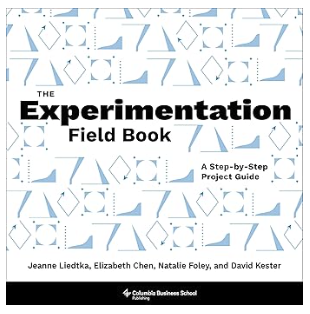
The Experimentation Field Book: A Step-by-Step Project Guide
Jeanne Liedtka, Elizabeth Chen, Natalie Foley, and David Kester. New York, NY: Columbia University Press. 2024. 108 pages.
Index Terms—assumption testing, experimental research, innovation, iterative improvement, prototyping
Reviewed by Lathiifah Thawafani , Student, Universitas Gadjah Mada, supported by Lembaga Pengelola Dana Pendidikan (LPDP), Indonesia.
The Experimentation Field Book: A Step-by-Step Project Guide provides researchers and practitioners with guidance on designing and conducting experiments to validate innovative ideas. It emphasizes a structured, hypothesis-driven approach to identify key assumptions, select testing methods, and gather data. This book includes guidelines and templates for documenting testing plans, covering test types, prototype formats, participants, sample sizes, and budgets. It emphasizes the importance of proper documentation to maintain credibility and transparency, particularly in cases of unexpected results.
Jeanne Liedtka, Elizabeth Chen, Natalie Foley, and David Kester present a methodology supporting rigorous, iterative innovation and experimentation. Key components include tools and templates to prioritize and test assumptions about new concepts. The Prioritizing Assumption tool helps teams rank and test critical assumptions first. The methodology stresses repeated testing and refinement, adapting plans based on new insights to reduce risk and increase success.
Successful experimental research and innovation require a structured approach, and the authors provide a range of templates to achieve this. One key template is the Business Value Matrix, which helps teams focus on projects with the highest return on investment. The Prioritizing Assumptions tool enhances this process by pinpointing the most crucial assumptions that require immediate testing. Deciding on the appropriate type of research is also crucial, and the Say–Do Continuum assists teams in choosing between generative research to generate ideas or evaluative research to test solutions. The Assumption Surfacing tool thoroughly examines all aspects of the concept, including user desirability and technical feasibility. Finally, the Test Planning Template documents the testing process, tracking assumptions, evidence sought, and data collected. By collectively using this suite of templates, teams can conduct experimental research systematically, prioritize and test their concepts effectively, and refine them based on the results obtained.
This study’s strength lies in its systematic approach to innovation, which helps researchers test assumptions and refine concepts. It offers a framework for prioritized testing and iterative improvement, emphasizing the right prototype format and detailed documentation to ensure credible research. However, the detailed methodology can be time-consuming and may require flexibility for different projects.
The Experimentation Field Book equips researchers with a structured approach to innovation and experimentation. Its clear methodology, detailed templates, and emphasis on iterative testing and documentation guide researchers through every stage of the experimental process, from assumption prioritization and prototype development to data analysis, paving the way for groundbreaking advancements.

Managing Risk in Projects, 2nd ed.
David Hillson. New York, NY: Routledge. 2024. 170 pages, including index.
Index Terms—leadership, mitigation, project lifecycle, risk management, uncertainty
Reviewed by Putri Melati, Student, Universitas Gadjah Mada, supported by Lembaga Pengelola Dana Pendidikan (LPDP), Indonesia.
Managing Risk in Projects, 2nd Edition explores risk management principles and practices highlighting the need for a tailored approach that matches project complexity. Regular risk updates are crucial, especially for high-risk and long-duration projects. The project sponsor must provide resources and funding, as well as actively monitor risk thresholds for project success. The book also addresses theoretical foundations, referencing Dale Cooper and John Major. Risk management applies to all projects across industries and countries adhering to international best practices. Besides tools and techniques, effective risk management necessitates understanding human behavior and psychology to improve decision-making and organizational strategy.
The book advances project management by thoroughly analyzing risk management practices and their integration with other disciplines. It offers practical guidance on implementing strategies, strengthens theoretical foundations, and highlights the crucial role of leadership.
David Hillson defines risk as “uncertainty that matters” (p. xiv)marking a key shift in risk management. This definition emphasizes the impact of uncertainty on achieving goals rather than just the uncertainty itself, highlighting its potential influence on objectives. The author contends that while not all uncertainties are risks, all uncertainties can affect goal achievement positively or negatively. This view expands the traditional focus on negative outcomes to include opportunities for favorable results. By incorporating the identification and exploitation of positive uncertainties, Hillson enhances the scope and value of risk management. His definition aligns with the broader aim of risk management, which is to optimize the achievement of project and organizational goals by addressing uncertainties with the greatest potential impact.
Effective project risk management requires integrating diverse techniques into a cohesive strategy. The “Built-In, Not Bolt-On” approach incorporates risk management throughout the project lifecycle. By breaking the project into smaller components, detailed risk analysis and targeted mitigation become possible. Tools such as quantitative risk analysis, scenario planning, and sensitivity analysis provide essential data and enhance assessment accuracy. Additionally, fostering a culture of risk awareness and proactive management is crucial. Combining these methods allows organizations to better identify, analyze, and manage project risks, thereby improving the likelihood of project success.
The book provides a thorough exploration of risk management, offering valuable insights and practical guidance for handling project risks. Its in-depth coverage delivers both breadth and depth benefiting readers aiming to deepen their understanding of the field. However, the material’s complexity and the potential for rapid changes in the field may pose challenges that readers and practitioners need to navigate to fully leverage its benefits.
Managing Risk in Projects is highly relevant to a wide audience in project and risk management, particularly project managers who play a l role in project execution and risk management. The book’s comprehensive coverage, from foundational concepts to advanced practices, aims to boost project managers’ skills in handling uncertainties, thereby advancing the broader field of project management excellence. This resource is invaluable for practitioners, scholars, and organizations aiming to improve project outcomes through effective risk management.